
Outlet Installation Best Practices for Modern Homes in Apple Valley, MN
Planning an outlet installation in Apple Valley, MN? The right receptacles can make your home safer, more convenient, and better suited to modern electrical needs. Learn where to add outlets during a remodel, when older receptacles should be replaced, and how GFCI, USB, smart, and dedicated outlets can improve different areas of your home.

Modern homes depend on more electrical devices than ever, but the outlets serving them are often an afterthought. Homeowners may end up relying on extension cords, crowded power strips, inconveniently placed receptacles, or older outlets that no longer fit the way a room is used.
Planning outlet installation in Apple Valley, MN gives homeowners an opportunity to think beyond simply adding another place to plug something in. The type of outlet, its location, the circuit serving it, and the electrical demands of the equipment all matter.
Whether you're remodeling a kitchen, finishing a basement, setting up a home office, replacing damaged receptacles, or simply adding outlets where your family needs them, thoughtful planning can make the electrical system more practical for everyday life.
Key Takeaways
- Outlet placement should reflect how you actually use each room, not just where an outlet happens to fit.
- GFCI protection is especially important in areas where electricity and moisture may come into contact.
- USB and smart outlets can reduce clutter and add convenience, but they should still be selected according to the needs of the space.
- Loose, damaged, discolored, or unreliable outlets should be evaluated rather than ignored.
- Remodeling is one of the best times to reconsider outlet placement and electrical capacity.
- Adding outlets may require more than replacing a receptacle, especially when new wiring, dedicated circuits, or panel changes are involved.
Start With How You Use the Room
One of the best practices for outlet installation is also one of the simplest: decide how the room will actually be used before determining where the outlets should go.
Think about where furniture, appliances, electronics, lamps, televisions, chargers, and workspaces will be located.
For example, a home office may benefit from receptacles near the desk instead of relying on a power strip stretched from another wall. A kitchen may need convenient power for countertop appliances. A bedroom may benefit from outlets positioned near nightstands, while a finished basement may need receptacles near entertainment equipment or a future workspace.
Planning these details early is especially valuable during electrical remodeling, when walls may already be open and electrical layouts can be coordinated with the rest of the project.
Expert Insight: Think about outlet placement before furniture, cabinetry, televisions, desks, or appliances are permanently positioned. A few minutes of planning can prevent years of extension cords and inconvenient charging setups.
Know When an Electrical Outlet Should Be Replaced
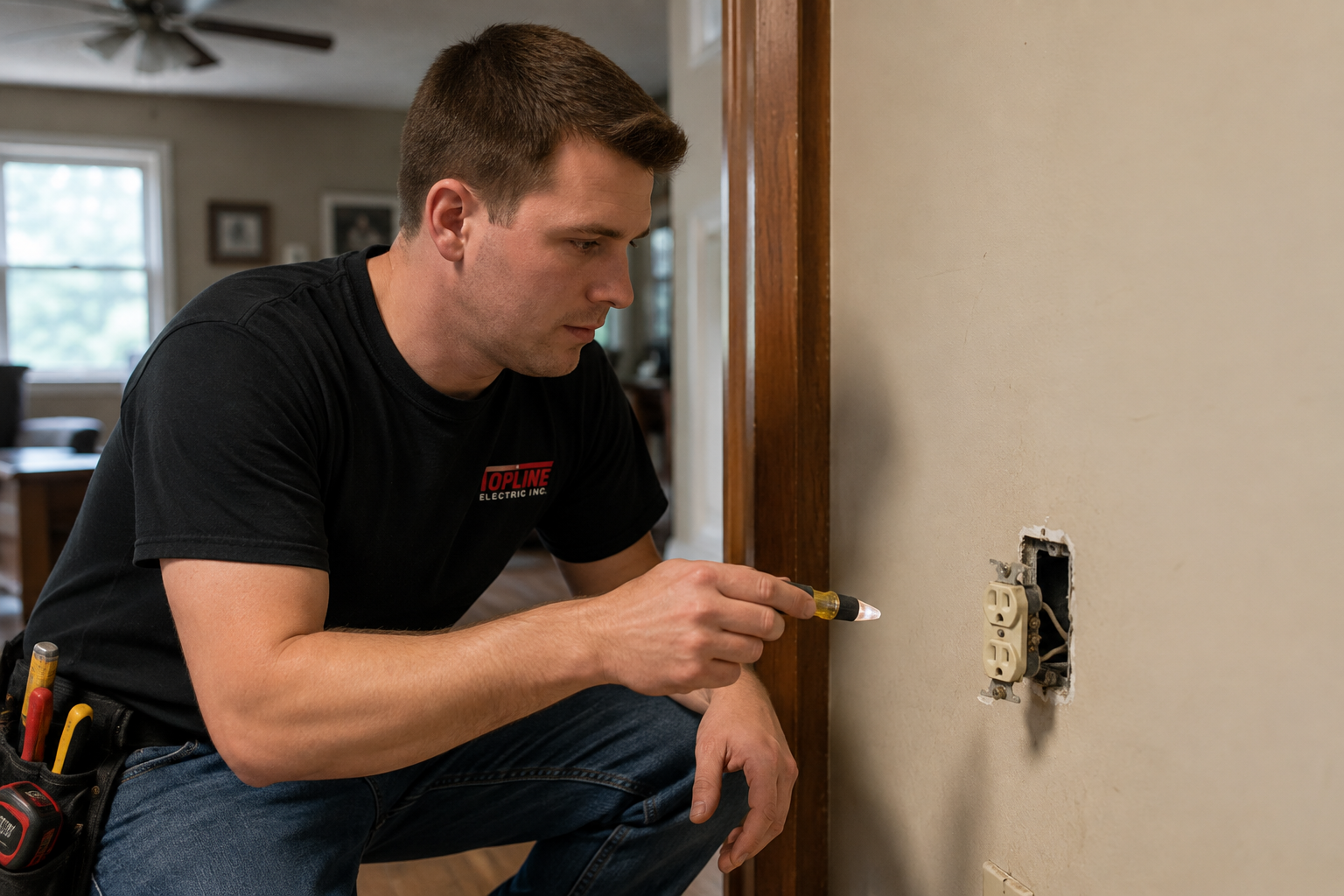
Not every outlet needs to be replaced simply because it is old. However, receptacles can wear out or become damaged over time.
An electrical outlet replacement may be worth discussing with an electrician if you notice:
- Plugs that repeatedly fall out of the receptacle
- Cracks or physical damage
- Discoloration around the outlet
- A burning smell
- Sparking
- Unusual warmth
- Intermittent power
- Buzzing or crackling sounds
- An outlet that has stopped working
- An outlet that moves when a plug is inserted or removed
These symptoms can have different causes. The problem may involve the receptacle itself, but it could also involve a loose connection, damaged wiring, a tripped protective device, or another issue elsewhere on the circuit.
If an outlet repeatedly loses power or behaves unpredictably, electrical troubleshooting can help identify the underlying cause instead of simply replacing components and hoping the problem goes away.
Do not continue using an outlet that is visibly damaged, excessively hot, smoking, or producing a strong burning odor.
Choose the Right Outlet for the Location
Modern receptacles are available with different features and forms of protection. Choosing the right one depends on where it will be installed and what it will serve.
GFCI Outlet Installation
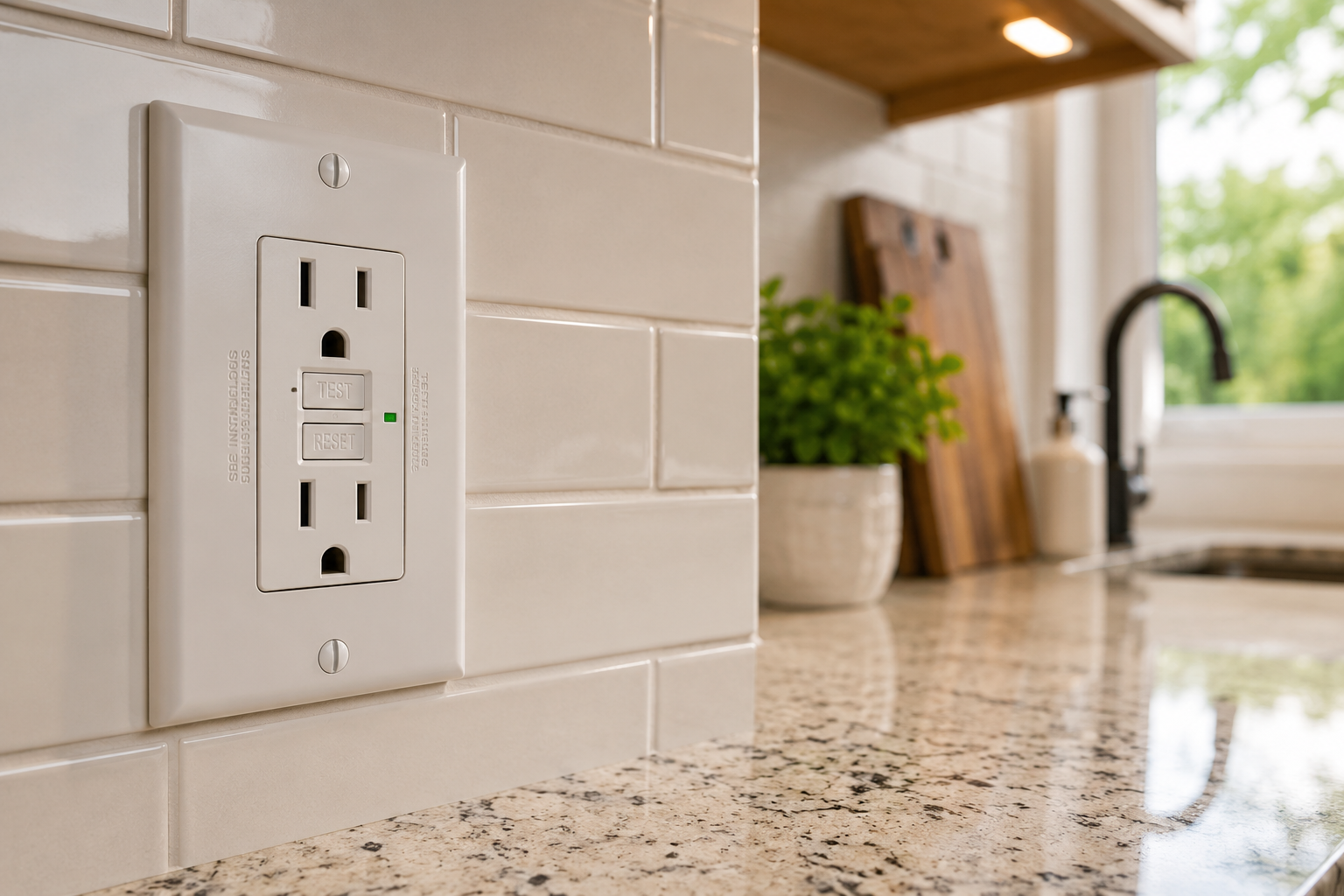
Ground-fault circuit interrupter protection is designed to reduce the risk of electric shock by interrupting power when a ground fault is detected.
GFCI protection is associated with locations where moisture or grounded surfaces can increase electrical risk, including areas such as kitchens, bathrooms, garages, basements, laundry areas, outdoor locations, and spaces near sinks.
For Apple Valley homeowners remodeling these areas, GFCI outlet installation should be part of the electrical planning conversation.
GFCI receptacles also have TEST and RESET functions. If a GFCI does not test or reset properly, it should be evaluated rather than assumed to be providing protection.
Expert Insight: A receptacle does not have to look damaged to have a problem. Protective devices such as GFCIs should operate correctly when tested, and a failed test is a reason to have the device checked or replaced.
Tamper-Resistant Outlets
Tamper-resistant receptacles use internal shutters that help prevent foreign objects from being inserted into the slots.
They can be particularly relevant in homes with young children, but their usefulness extends beyond nurseries and playrooms. They provide built-in protection without relying on removable plastic outlet caps.
When outlets are being replaced throughout a home, an electrician can determine where tamper-resistant receptacles are appropriate under current requirements.
USB Outlet Installation
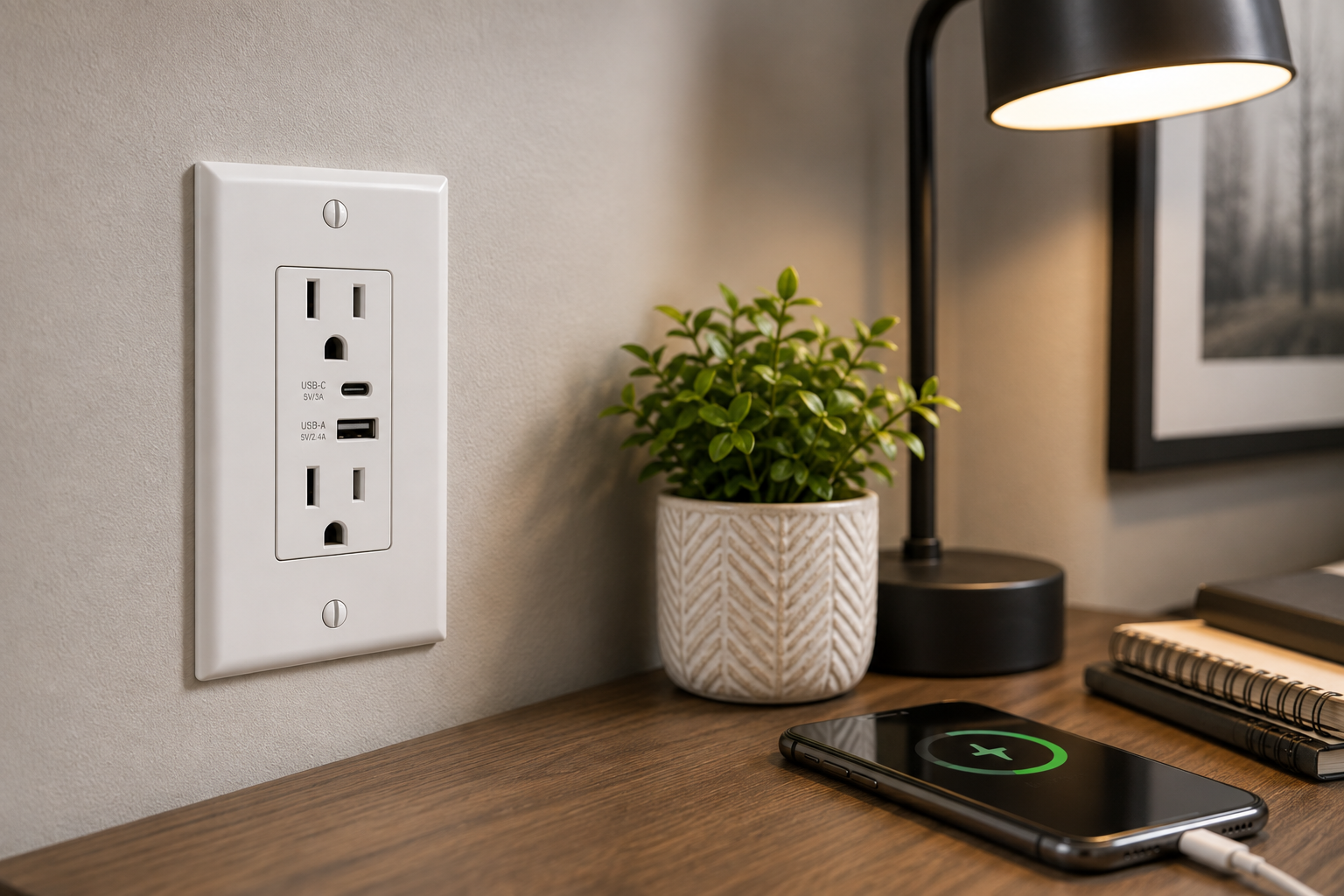
Phones, tablets, watches, speakers, and other devices have made charging part of everyday household life.
USB outlet installation can reduce the number of charging blocks occupying standard receptacles. Depending on the device, homeowners can choose outlets that combine traditional receptacles with USB-A or USB-C charging ports.
Good locations may include:
- Kitchen charging areas
- Home offices
- Bedrooms
- Family rooms
- Mudrooms
- Built-in desks
- Homework areas
USB outlets are most useful when installed where devices are actually charged. Installing them throughout the house without considering usage may add cost without adding much convenience.
Smart Outlet Installation
A smart outlet installation can give homeowners additional control over certain plugged-in devices.
Depending on the product and home automation system, smart receptacles may allow scheduling, remote control, voice-assistant integration, or energy-monitoring features.
Potential applications include lamps, seasonal decorations, small appliances, and other compatible loads.
Before choosing a smart receptacle, consider whether it works with your preferred smart-home platform and whether the connected equipment is appropriate for remote or scheduled operation.
Think Beyond the Outlet Itself
Installing a new outlet is not always as simple as placing another receptacle on the wall.
The electrician may need to determine:
- Which circuit will supply the outlet
- What else is already connected to that circuit
- Whether additional wiring is needed
- Whether the planned equipment requires a dedicated circuit
- Whether GFCI or AFCI protection applies
- Whether the electrical box is suitable
- Whether the home's existing electrical equipment can support the project
This becomes particularly important when the new receptacle will serve equipment with a significant electrical load.
If a remodeling project involves several new circuits or larger electrical additions, the electrician may also evaluate whether an electrical panel upgrade should be considered. The goal is not to upgrade a panel simply because outlets are being added. It is to make sure the electrical system can appropriately support the home's current and planned electrical needs.
Plan Outlet Installation Around Your Remodel

Remodeling is one of the best opportunities to improve outlet placement.
Instead of putting receptacles back exactly where they were, homeowners can consider how the renovated space will function.
Kitchen Remodels
Kitchen layouts can change significantly when cabinets, islands, countertops, and appliances are moved.
Electrical planning may need to account for:
- Countertop appliance locations
- Islands and peninsulas
- Refrigerators
- Microwaves
- Dishwashers
- Garbage disposals
- Range or cooking equipment
- Coffee stations
- Charging areas
- Under-cabinet equipment
Outlet planning should happen alongside the cabinet and appliance layout rather than after everything has been installed.
Bathroom Remodels
Bathrooms combine electricity and water, making outlet placement and protection especially important.
Homeowners may need receptacles for hair dryers, electric toothbrushes, grooming devices, bidet seats, or other bathroom equipment. The electrical design should account for where those devices will be used while maintaining the required protection and appropriate placement.
Basement Finishes
An unfinished basement may have very few conveniently located receptacles because the space was never designed as a finished living area.
Before finishing the walls, consider where you may eventually place:
- Televisions
- Gaming systems
- Desks
- Exercise equipment
- Lamps
- Charging stations
- Refrigerators or beverage coolers
Planning early makes it easier to create a finished space without immediately reaching for extension cords.
Home Offices
Home offices often accumulate computers, monitors, printers, chargers, routers, lamps, docking stations, and other equipment.
Adding outlets near the intended desk location can create a cleaner setup and reduce dependence on multiple power strips.
Planning a remodel or adding receptacles to an existing room? Topline Electric provides outlet installation in Apple Valley and can help determine the appropriate outlet type, placement, and electrical setup for your project.
Avoid Making Extension Cords a Permanent Solution
Extension cords can be useful temporarily, but they should not become a substitute for properly located permanent receptacles.
If the same extension cord remains in place because a room does not have enough outlets, that may be a sign that the electrical layout no longer matches how the space is being used.
The same applies to overloaded-looking charging stations and multiple power strips concentrated around one receptacle.
Adding properly planned outlets can reduce clutter and make it easier to distribute everyday electrical use throughout the room.
That does not mean every power strip indicates a problem. The goal is to identify situations where a temporary solution has effectively become part of the home's permanent electrical setup.
Consider Dedicated Circuits for Larger Loads
Some equipment should not simply be connected to whichever existing outlet is nearby.
Depending on the appliance or equipment, a dedicated circuit may be necessary or appropriate.
Examples can include certain:
- Kitchen appliances
- Garage equipment
- Freezers
- Heating equipment
- Laundry appliances
- Workshop tools
- Specialized home equipment
A licensed electrician can review the manufacturer's electrical requirements and determine how the equipment should be supplied.
This is another reason professional outlet installation involves more than the receptacle itself. The circuit behind the outlet matters just as much as the device you see on the wall.
Outdoor Outlets Need Special Consideration
Outdoor receptacles face conditions that indoor outlets do not, including moisture, temperature changes, snow, and rain.
Homeowners may want outdoor power for:
- Patio equipment
- Holiday lighting
- Landscaping
- Electric lawn equipment
- Entertainment areas
- Outdoor kitchens
- Tools
Outdoor installations require equipment and protection appropriate for the location.
If an existing outdoor receptacle is cracked, loose, damaged, or no longer protected from weather, have it inspected before continuing to use it.
What About Older Two-Prong Outlets?
Older homes may still have two-prong receptacles in some areas.
Replacing a two-prong receptacle with a three-prong model does not automatically create an equipment grounding path. The existing wiring and circuit configuration need to be evaluated to determine the appropriate solution.
This is a situation where simply swapping the visible receptacle can create a false impression that the electrical system has been fully modernized.
If you're updating older outlets during a remodel, have an electrician evaluate the existing wiring and explain the available options.
Should You Install an Electrical Outlet Yourself?
Replacing or adding an outlet involves permanent electrical wiring, so homeowners should understand the risks before treating it as a simple cosmetic project.
Incorrect wiring can result in:
- Shock hazards
- Loose electrical connections
- Overheating
- Equipment damage
- Improper grounding
- Incorrect polarity
- Missing required protection
- Electrical fire risks
New outlet installations may also involve permits and inspections depending on the scope and applicable jurisdiction.
For homeowners who want to install electrical outlet locations as part of a remodel or room upgrade, working with a qualified electrician helps ensure that the circuit, wiring, receptacle type, box, and protective devices are appropriate for the installation.
Expert Insight: The visible receptacle is only one part of the installation. Proper wiring, grounding, circuit protection, box fill, conductor connections, and compatibility with the existing system all matter behind the wall.
Electrical Permits and Current Requirements in Minnesota
Electrical requirements change over time, which is another reason homeowners should avoid relying on old online tutorials when planning new electrical work.
Minnesota adopts electrical standards that govern electrical wiring and equipment, and permit and inspection requirements can depend on the project and the authority responsible for the location.
For an Apple Valley project, the applicable requirements should be verified before work begins rather than assumed from a previous project or another city.
A professional electrician can help determine what applies to the specific scope of work.
When Should You Call an Electrician in Apple Valley, MN?
Consider contacting an electrician in Apple Valley, MN when:
- You want to add outlets to a room
- You are remodeling a kitchen, bathroom, basement, or addition
- Existing outlets are loose or damaged
- Plugs repeatedly fall out
- An outlet becomes unusually warm
- You notice discoloration or a burning smell
- An outlet sparks
- Power to a receptacle is intermittent
- You need GFCI protection
- You want USB or smart outlets
- New equipment may require a dedicated circuit
- You are replacing older two-prong receptacles
- You are unsure whether the existing circuit can support additional loads
If an outlet is smoking, sparking repeatedly, or showing signs of overheating, stop using it and have the problem professionally evaluated.
Why Apple Valley Homeowners Choose Topline Electric
Topline Electric serves Apple Valley homeowners with outlet installation and a range of residential electrical services.
That includes help with outlet work, electrical troubleshooting, electrical repair, lighting, panel upgrades, generators, and remodeling projects.
For homeowners, that means an outlet project can be evaluated as part of the home's larger electrical system instead of treating the receptacle as an isolated component.
Whether you are replacing one damaged outlet or planning receptacles throughout a renovated space, the objective should be the same: safe, practical electrical access that matches how you use your home.
Frequently Asked Questions
How do I know if I need more electrical outlets?
If you regularly rely on extension cords or power strips because receptacles are not located where you use electrical devices, additional outlets may improve the room's functionality. An electrician can determine whether new outlets can be added to an existing circuit or whether additional circuitry is appropriate.
Where should GFCI outlets be installed?
GFCI protection is commonly required in areas where electrical equipment may be exposed to moisture or grounded surfaces, including kitchens, bathrooms, garages, basements, laundry areas, outdoor locations, and certain locations near sinks. Current requirements should be verified for your specific project.
Are USB outlets worth installing?
USB outlets can be useful in locations where phones, tablets, and other devices are regularly charged. They are especially practical near desks, beds, kitchen charging stations, and family-room furniture.
Can I replace a two-prong outlet with a three-prong outlet?
The existing wiring and grounding arrangement should be evaluated first. Simply installing a three-prong receptacle does not automatically create a grounding path.
Why does my plug keep falling out of the outlet?
The receptacle's internal contacts may be worn or damaged. If plugs no longer fit securely, have the outlet evaluated and replaced when appropriate.
Can I add an outlet anywhere in my house?
Not necessarily. The electrician needs to consider wiring access, circuit capacity, outlet location, required protection, and the equipment the receptacle will serve.
Do I need a dedicated circuit for a new outlet?
It depends on what the outlet will power and the requirements for that equipment. Larger appliances and specialized equipment may require dedicated circuitry.
Who provides outlet installation in Apple Valley, MN?
Topline Electric provides outlet installation and other residential electrical services for homeowners in Apple Valley, MN. An electrician can evaluate the existing system, discuss the intended use of the new outlet, and recommend an appropriate installation.
Plan Your Outlet Installation Around the Way You Live
Good outlet placement can make a surprisingly large difference in how comfortable and functional a home feels.
Instead of adding receptacles wherever there happens to be room, consider where you charge devices, use appliances, position furniture, work from home, and plan future upgrades.
The right installation may involve a standard receptacle, GFCI protection, USB charging, smart controls, a dedicated circuit, or additional electrical work depending on the space.
If you're planning outlet installation in Apple Valley, MN, contact Topline Electric to discuss your project and determine the right outlet setup for your home.
