
Home Generator Installation in Lakeville, MN Before Winter
Planning home generator installation in Lakeville, MN before winter can help protect your home during unexpected power outages. This guide explains how to choose the right standby generator, determine the proper generator size, understand the installation process, and safely prepare your backup power system. You'll also learn about transfer switches, electrical panel upgrades, generator maintenance, and when it's time to call a licensed electrician.
Home generator installation in Lakeville, MN is best planned before winter weather arrives. Starting early gives you time to choose the right generator, evaluate your electrical system, arrange any necessary fuel work, complete permits and inspections, and test the equipment before you need it.
A professionally installed standby generator can restore selected circuits or, with the right system, most of the home after utility power fails. The correct setup depends on your electrical load, heating equipment, fuel availability, property layout, and the systems you consider essential.
Key Takeaways
- A generator should be sized according to the loads you want to operate, not simply the square footage of the home.
- An automatic transfer switch separates generator power from utility power and helps prevent dangerous backfeeding.
- Installation may involve electrical, fuel, placement, permitting, and inspection requirements.
- Planning before winter leaves time to complete the work and test the system under normal conditions.
- Generator placement, exhaust clearance, carbon-monoxide protection, and maintenance all affect safe operation.
Why Schedule Home Generator Installation Before Winter?
Scheduling before winter gives you more control over the project. Instead of making decisions during an outage or immediately before severe weather, you can compare system options and prepare the property carefully.
Winter storms can involve snow, ice, wind, and dangerously low temperatures. The National Weather Service notes that freezing rain and ice accumulation can damage trees and power lines. Major winter storms may also leave households without utilities or services for an extended period. (National Weather Service)
For Lakeville homeowners, an outage during cold weather can affect more than lighting. Depending on the home, it may interrupt:
- Furnace controls and blower motors
- Boilers or circulation pumps
- Refrigerators and freezers
- Sump pumps
- Well pumps
- Medical equipment
- Internet and communication devices
- Garage-door openers
- Kitchen circuits
- Security systems
A generator does not automatically power every item in the house. The system must be selected and configured around the loads that matter most.
Expert Insight: Generator planning should begin with the equipment you need to keep running, not with a generator model. A licensed electrician will typically review the starting and running requirements of those loads before recommending system capacity.
What Is a Standby Generator?
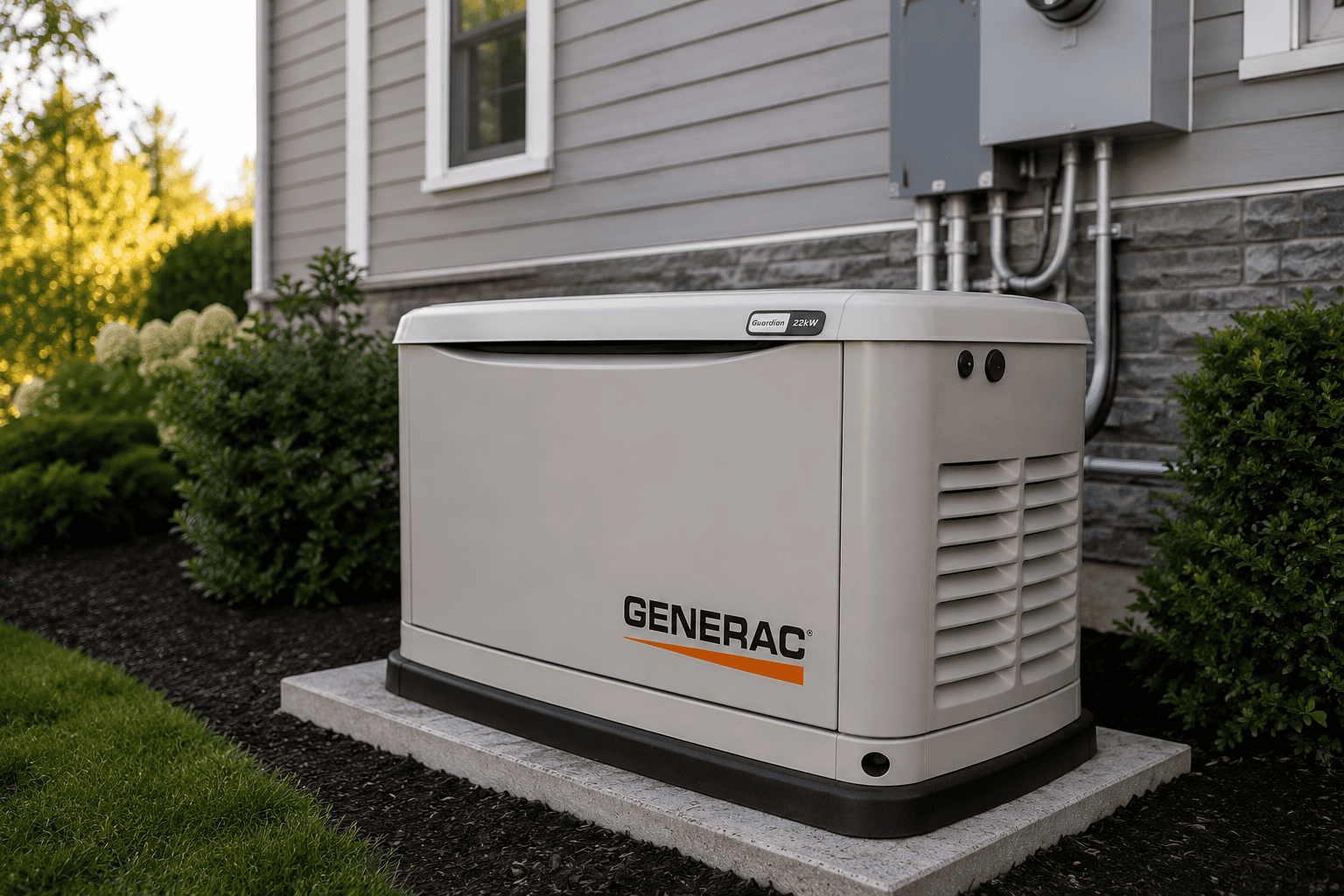
A standby generator is a permanently installed outdoor unit that provides backup electricity when utility power is interrupted. It is often connected to natural gas or propane and paired with an automatic transfer switch.
When the transfer switch detects a loss of utility power, it disconnects the home from the utility supply and signals the generator to start. Once generator power is stable, the switch supplies electricity to the selected circuits. When utility service returns, the system transfers the home back and shuts the generator down.
A stationary generator is also commonly described as a home standby generator or whole home generator. The U.S. Consumer Product Safety Commission describes it as a permanently installed outdoor product designed to supply power during a utility outage. (U.S. Consumer Product Safety Commission)
Standby Generator Versus Portable Generator
Both can provide backup power, but they serve different needs.
A portable generator is moved into position when needed. Appliances may be connected with properly rated cords, or the unit may be connected to approved home wiring through suitable transfer equipment.
A standby generator remains installed outside the home. It can start automatically and supply preselected circuits or broader whole-home coverage.
A standby system may be more suitable for homeowners who:
- Travel frequently
- Want automatic operation
- Need heating equipment to restart without manual setup
- Depend on a sump pump or well pump
- Want fewer extension cords during an outage
- Need a more integrated backup-power solution
Portable generators still require strict safety precautions. They should never be operated in a house, garage, basement, shed, or other enclosed space.
How Much of Your Home Should the Generator Power?
The right coverage depends on your priorities and budget. Some homeowners want only essential circuits, while others want a system capable of supporting most normal household functions.
Essential-Circuit Coverage
An essential-circuit system may power selected loads such as:
- Furnace or boiler controls
- Refrigerator and freezer
- Sump pump
- Well pump
- Several lighting circuits
- Internet equipment
- Selected receptacles
- Medical or accessibility equipment
This approach can reduce the required generator capacity, but the selected loads must still be evaluated carefully.
Managed Whole-Home Coverage
A larger whole home generator may serve much of the home’s electrical system. However, that does not always mean every high-demand appliance can operate at the same time.
In some homes, the existing panel may not have enough capacity, space, or compatibility for the planned backup-power setup. In that case, an electrical panel upgrade service may be recommended before or during generator installation. Upgrading the panel can help support new transfer equipment, improve circuit organization, and prepare the electrical system for the generator’s intended load.
Load-management equipment may also temporarily delay certain circuits when demand is high. For example, the system might prioritize heating, refrigeration, and the well pump before allowing another large load to operate.
Expert Insight: Large equipment can require considerably more power while starting than while running. Generator sizing should account for startup demand from motors, pumps, compressors, and heating equipment, not just the wattage shown during normal operation.
How Is a Generator Sized?
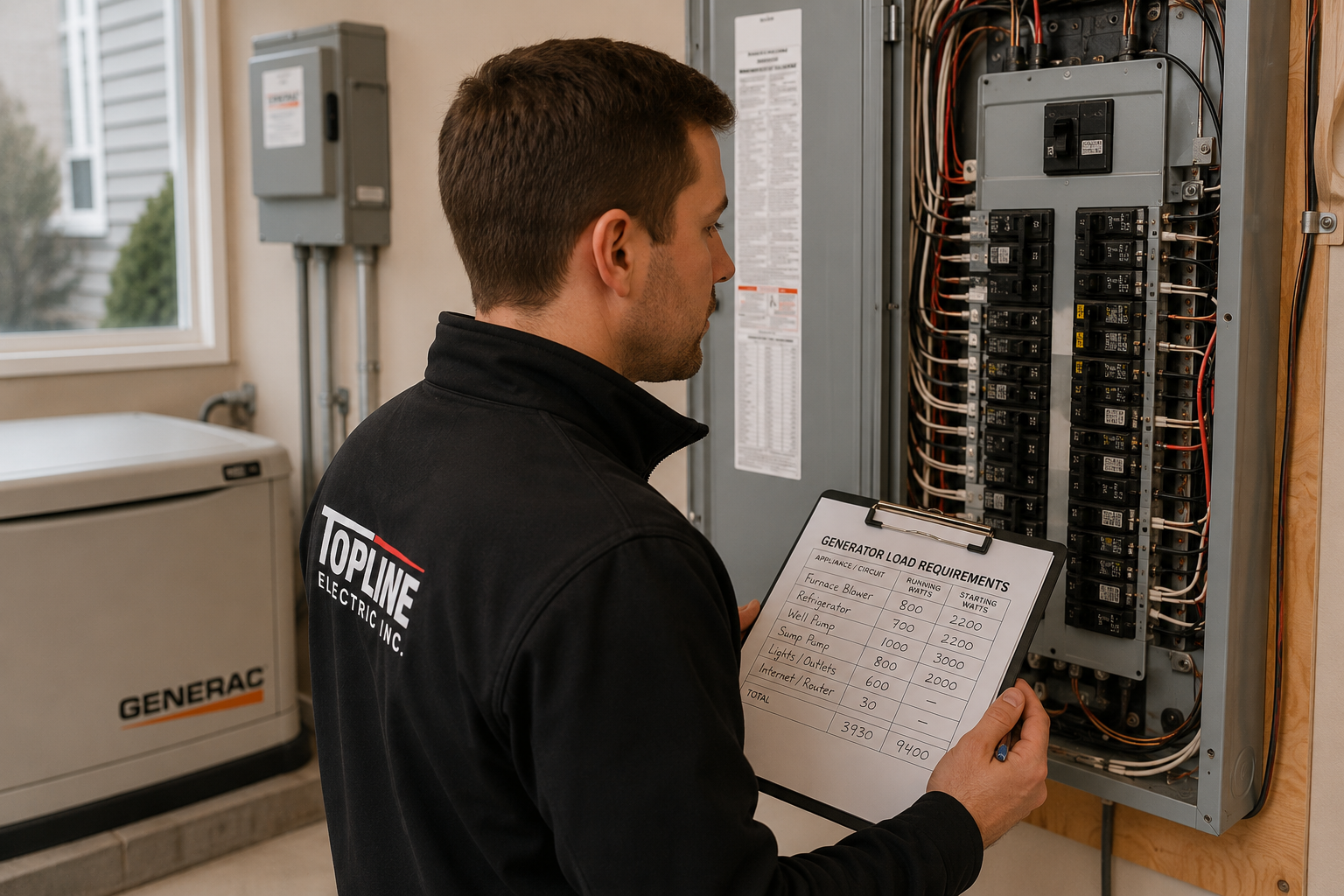
A generator is sized through an electrical load assessment. A generator electrician identifies the circuits and equipment the homeowner wants backed up and then evaluates their starting and running requirements.
The assessment may include:
- The home’s electrical service size
- Heating-system electrical requirements
- Well or sump-pump loads
- Refrigeration equipment
- Electric cooking or laundry equipment
- Air-conditioning or heat-pump loads
- Medical or accessibility devices
- Future electrical additions
- Whether load-management controls will be used
Choosing a unit that is too small can lead to overloads or repeated shutdowns. Choosing one far larger than necessary may add cost without providing meaningful value.
Online generator-sizing calculators can be useful for early research, but they are not a substitute for an on-site evaluation.
Why Is an Automatic Transfer Switch Important?
An automatic transfer switch controls whether the home receives electricity from the utility or the generator. It prevents both sources from feeding the electrical system at the same time.
This separation is essential because an improperly connected generator can send electricity back onto utility lines. That condition, known as backfeeding, can endanger utility workers, damage equipment, and create serious shock or fire hazards.
The Electrical Safety Foundation International states that a transfer switch is the proper method for connecting backup generation to a home’s electrical system and that it helps prevent backfeeding. (Electrical Safety Foundation International)
Never connect a portable generator to a household outlet in an attempt to energize the home. Generator connections to permanent wiring should be designed and installed by a qualified professional.
What Happens During Standby Generator Installation?
A professional standby generator installation generally includes planning, site preparation, electrical connections, fuel coordination, startup, and testing.
1. Home and Load Evaluation
The electrician discusses which systems need backup power and reviews the home’s service panel, available space, electrical loads, and existing equipment.
2. Generator Selection
The generator is selected based on capacity, fuel type, desired coverage, property conditions, manufacturer requirements, and load-management needs.
3. Site and Placement Review
The installer evaluates potential outdoor locations. Placement must account for:
- Manufacturer-required clearances
- Doors, windows, vents, and air intakes
- Exhaust direction
- Service access
- Snow accumulation
- Drainage
- Fuel and electrical routing
- Property and permitting requirements
Equipment should not be placed wherever it is most convenient without evaluating exhaust and ventilation.
4. Transfer-Switch and Electrical Work
The electrician installs the transfer equipment and connects the selected circuits or service configuration. Additional panel work may be necessary when the existing electrical equipment lacks capacity, space, or compatibility.
5. Fuel Connection
A qualified fuel professional may need to verify or install the natural-gas or propane connection. Fuel capacity must support the generator under load.
6. Permits and Inspection
Electrical permits and inspections may apply. Minnesota provides an electrical permitting and inspection process, but inspection authority can vary because some cities have local electrical jurisdiction. Homeowners and contractors should verify the applicable authority before work begins. (MN DLI)
The City of Lakeville advises property owners to contact Building Inspections when they are uncertain whether a project requires a permit. (Lakeville MN)
7. Startup and Testing
After installation, the system is started and tested. The installer verifies transfer operation, generator output, selected loads, shutdown behavior, and basic owner controls.
Expert Insight: A generator installation is not complete just because the engine starts. The transfer sequence, electrical output, fuel supply, circuit loading, alarms, shutdown functions, and return to utility power should also be checked.
Planning backup power before winter? Schedule generator installation in Lakeville with Topline Electric to discuss your electrical loads, system options, and installation requirements.
Local Considerations for Lakeville Homeowners
Generator installation has a genuine connection to Minnesota’s climate, but the system should be planned for year-round outages rather than winter alone.
Snow and Equipment Access
A generator needs adequate airflow and clear service access. The installation location should allow the homeowner to keep the surrounding area clear without directing snow toward air openings or exhaust areas.
The unit should not be buried by snowbanks, roof runoff, or drifting snow. Manufacturer clearance and maintenance instructions should always take priority.
Heating-System Electrical Demand
Even when a home uses natural gas for heat, the heating system may still rely on electricity for controls, blowers, pumps, ignition, thermostats, or zone valves. A generator electrician should identify those loads rather than assuming a gas-fired system will operate without electrical power.
Sump Pumps and Well Pumps
Homes with a sump pump or private well may need to prioritize motor loads. These appliances can have significant startup demand, so they should be included in the load calculation from the beginning.
Winter Installation Timing
Planning early can help avoid rushed decisions and leave time for:
- Equipment selection
- Site review
- Utility or fuel coordination
- Permit processing
- Electrical-panel changes
- Inspection
- Testing
- Owner orientation
The goal is not merely to install the generator before a particular date. It is to complete the system safely and confirm that it works before an outage.
Generator Safety Every Homeowner Should Know
Backup power equipment involves electricity, fuel, heat, exhaust, and moving machinery. Safe installation and operation require more than choosing a generator with enough wattage.
Carbon Monoxide
Generator engines produce carbon monoxide, a colorless and odorless poisonous gas. Exhaust must be directed away from occupied spaces and openings.
Never operate a portable generator inside:
- A home
- An attached or detached garage
- A basement
- A shed
- A crawlspace
- An enclosed porch
The National Weather Service advises homeowners never to run generators in enclosed spaces and to confirm that carbon-monoxide detectors are working. (National Weather Service)
Electrical Backfeeding
Never attempt to power household wiring by plugging a generator into a wall receptacle. Only approved transfer equipment should connect a generator to the home’s electrical system.
Moisture and Snow
Portable generators should be kept dry and should not be operated in wet conditions without an approved protective setup that preserves ventilation. Permanent standby equipment must be installed according to its outdoor rating and manufacturer instructions.
Overloading
Do not operate more equipment than the generator can safely support. Overloading may cause shutdowns, unstable voltage, overheating, or equipment damage.
Hot Surfaces and Fuel
Generator components and exhaust systems become hot. Portable units should be allowed to cool before refueling. Fuel should be stored and handled according to the manufacturer’s instructions and local requirements.
Expert Insight: Many generator problems are not caused by the generator itself. An electrician may need to investigate overloaded circuits, incorrect transfer equipment, undersized conductors, weak batteries, fuel issues, damaged connections, or neglected maintenance.
How Should You Prepare a Generator for Winter?
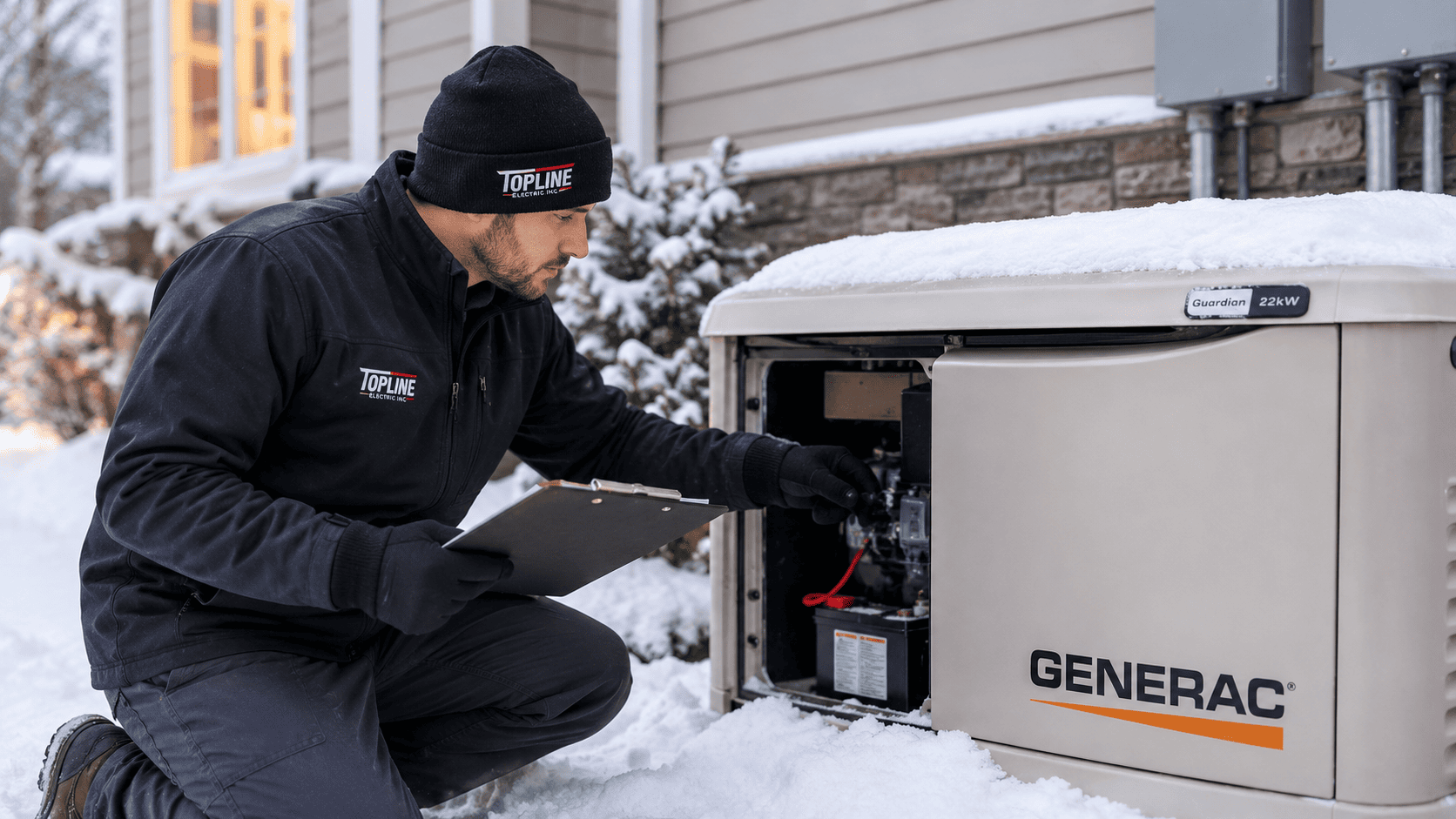
A standby generator should be inspected and maintained according to the manufacturer's recommended schedule. Don't wait until a power outage to discover the battery is weak or the unit has an active fault. If you're looking for ways to prepare a generator for winter, scheduling routine maintenance before cold weather arrives can help identify potential issues early and keep your backup power system ready when you need it most.
Before winter, homeowners should confirm that:
- The generator completes its scheduled exercise cycle.
- No warning or fault message is present.
- The area around the unit is clear.
- Air openings are unobstructed.
- The exhaust path is clear.
- The fuel supply is available.
- The battery is in serviceable condition.
- Maintenance is current.
- Carbon monoxide alarms are working.
- Household members understand basic generator operation.
If it's been a while since your system was last inspected or serviced, a licensed electrician can check the generator's operation, inspect key electrical components, and confirm the system is ready for the next power outage.
Do not remove covers or attempt internal electrical repairs unless the manufacturer specifically identifies the task as owner maintenance.
When Should You Call a Licensed Electrician?
Call a licensed electrician in Lakeville when the generator or connected electrical system shows signs of unsafe or unreliable operation.
Professional attention is appropriate when:
- The generator will not start
- The system starts but does not power the home
- The transfer switch does not operate correctly
- Breakers trip repeatedly
- Lights flicker excessively on generator power
- Wiring or equipment becomes unusually warm
- You notice burning odors, smoke, or sparking
- The generator shuts down under load
- Water or physical damage affects the equipment
- The electrical panel needs modification
- You want to add more backed-up circuits
- You are unsure whether the system meets current requirements
Move away from equipment that is smoking, sparking, or producing a strong burning odor. Do not open energized panels or bypass safety controls.
Why Choose Topline Electric?
Topline Electric provides generator installation, repair, and maintenance services in Lakeville and throughout the Twin Cities south metro. The company’s website states that its generator services include automatic standby and portable generator systems, transfer-switch installations, maintenance, and repair. Topline Electric also identifies itself as an authorized Generac and Duromax dealer. (Topline Electric)
Topline Electric offers residential and commercial electrical services, including electrical troubleshooting, panel upgrades, electrical repair, outlet installation, lighting installation, and generator installation. Its residential work is backed by a lifetime craftsmanship guarantee, according to the company website. (Topline Electric)
Frequently Asked Questions
How early should I schedule generator installation before winter?
Begin planning before severe winter weather is expected. The project may require an assessment, equipment selection, fuel coordination, permitting, electrical work, inspection, and final testing.
Can a standby generator power my entire house?
It can, if the generator and transfer equipment are properly designed for the home’s load. Some systems use load management so high-demand equipment does not operate simultaneously.
What size generator does my Lakeville home need?
The correct size depends on the appliances and systems you want to operate. A licensed electrician should calculate starting and running loads, including pumps, motors, heating equipment, and other high-demand devices.
Does a gas furnace need generator power?
Usually, yes. Although the furnace may burn natural gas, its controls, ignition system, thermostat, and blower motor generally require electricity.
Is a transfer switch required for a standby generator?
A permanently connected standby generator uses approved transfer equipment to separate generator power from utility power. This prevents the two sources from energizing the home at the same time.
Where can a standby generator be installed?
The location depends on manufacturer instructions, exhaust clearances, doors and windows, service access, fuel routing, drainage, snow conditions, and applicable local requirements.
Does generator installation require a permit in Lakeville?
Electrical and other permits may apply depending on the work involved and the responsible inspection authority. The installer should verify current requirements with the appropriate state or local authority before installation.
How often should a standby generator be maintained?
Follow the manufacturer’s schedule. Maintenance may be based on calendar time, operating hours, or both and can include oil, filters, batteries, spark plugs, inspection, and operational testing.
Prepare Your Home Before the Next Outage
Home generator installation in Lakeville, MN should begin with a clear plan for the circuits and equipment your household needs during an outage. Correct sizing, safe placement, approved transfer equipment, permits, professional electrical work, and routine maintenance all help the system operate as intended.
Planning before winter provides time to make those decisions carefully rather than reacting after the power goes out.
Contact Topline Electric to discuss generator installation in Lakeville and determine which backup-power configuration is appropriate for your home.
